
Small Call to Action Headline
BLACK HAMMOCK BODY CONDITION SCORING
MESSAGE FROM THE OWNER
Body Condition Scoring (BCS) is one of the most powerful management tools available to sheep producers—a simple, hands-on assessment that reveals whether your flock has the body reserves needed for optimal health, reproduction, and productivity. Using a standardized 1-to-5 scale, BCS evaluates the amount of fat and muscle covering a sheep's lumbar region, providing crucial insights that guide feeding decisions throughout the production cycle. This comprehensive guide walks you through Black Hammock Farm's BCS protocol, teaching you exactly what to feel for, when to score, and what management actions to take.
What is Body Condition Scoring (BCS)?
Body Condition Scoring (BCS) is a standardized assessment method used to evaluate the amount of fat and muscle reserves on a sheep's body. Unlike weighing or visual observation alone, BCS provides a reliable, hands-on technique for determining whether individual animals or entire flocks have adequate energy stores to support their current life stage and production demands.
The BCS Scale
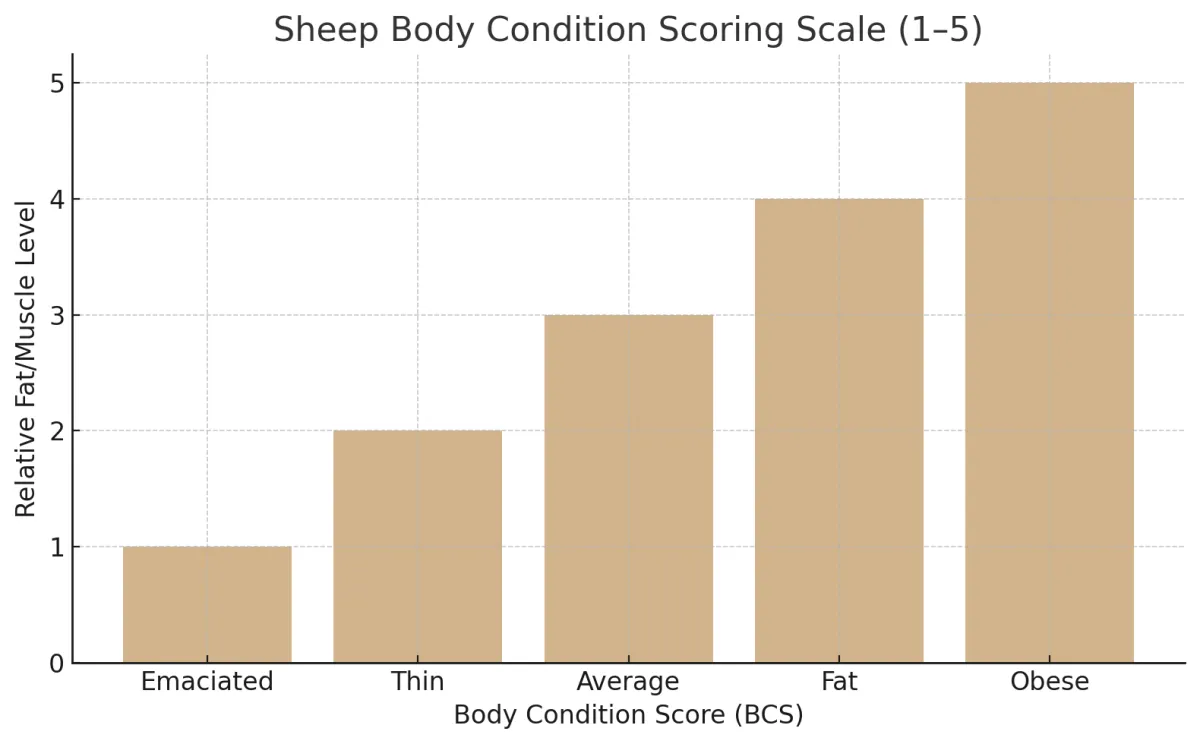
The sheep BCS system uses a 1-to-5 point scale, with half-point increments allowed for precision:
Score 1: Emaciated - spinous and transverse processes are sharp and prominent, no fat cover, the loin muscle is thin
Score 2: Thin - processes are smooth but still easily felt, minimal fat cover
Score 3: Average - moderate fat and muscle cover, processes can be felt with pressure
Score 4: Fat - thick fat cover, processes difficult to feel, loin muscles full and rounded
Score 5: Obese - processes cannot be detected even with firm pressure, excessive fat deposits including brisket area
How BCS is Performed
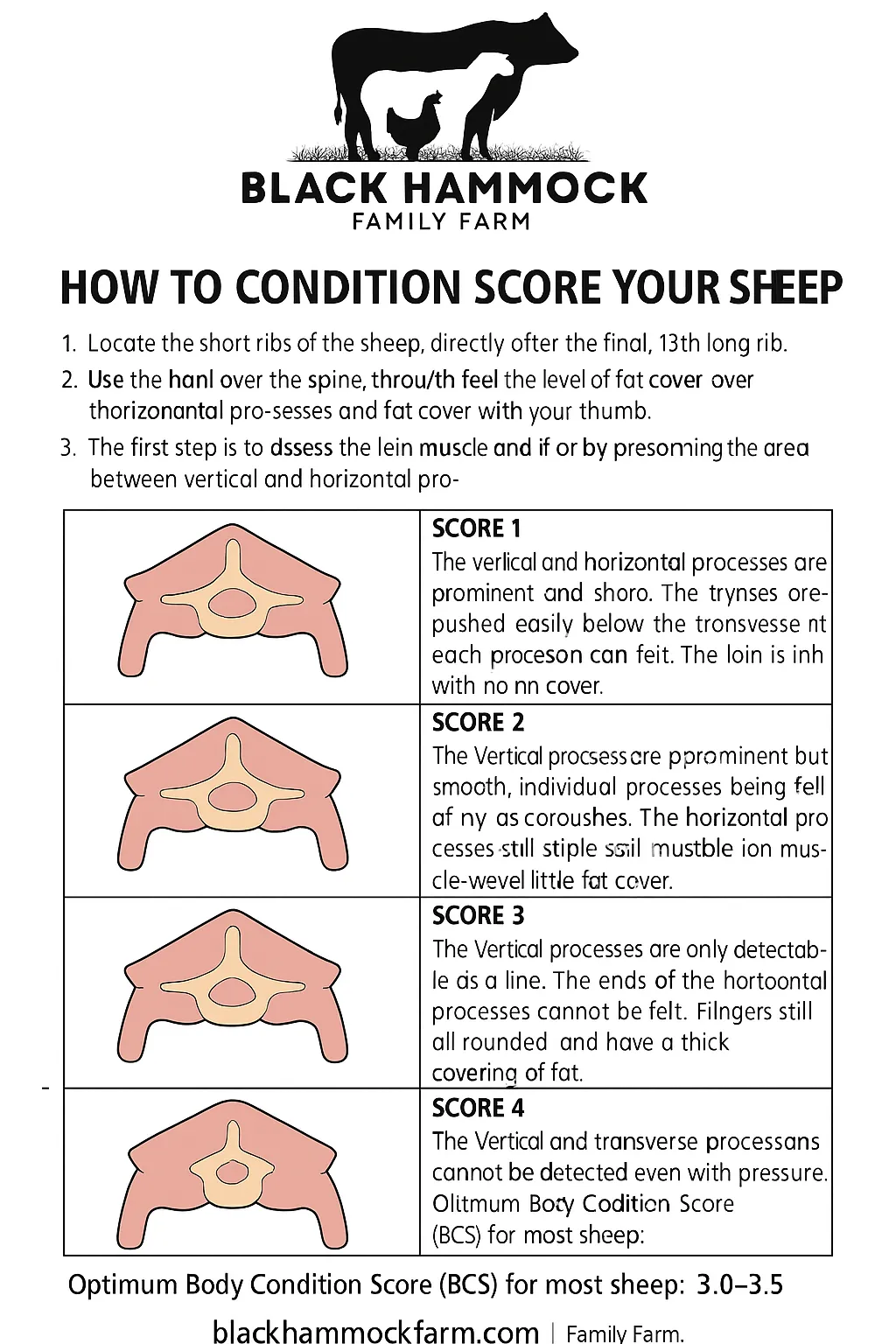
Body condition scoring requires physical palpation rather than visual assessment. The evaluation focuses on the lumbar region—the area of the spine between the last rib and the hip bones. Using your fingers and thumb, you assess:
1. Spinous processes (vertical bones of the spine): How prominent or covered they are
2. Transverse processes (horizontal bones extending from the spine): How easily you can feel them and press fingers underneath
3. Loin muscle fullness: The amount of muscle development
4. Fat cover: The thickness of fat layer over bones and muscle
5. Overall eye and cover: The smoothness of the topline and general appearance of body reserves
Why BCS Matters
Body condition directly impacts critical production outcomes:
Reproduction: Ewes with BCS below 2.5 at breeding have lower conception rates and increased embryonic loss
Lambing success: Properly conditioned ewes (BCS 2.5-3.5) produce more colostrum, have better maternal instincts, and wean heavier lambs
Health status: Sudden changes in BCS can indicate illness, parasitism, or nutritional deficiencies before other symptoms appear
Feed efficiency: Over-conditioned sheep waste feed resources; under-conditioned animals cannot perform optimally
Target BCS by Production Stage
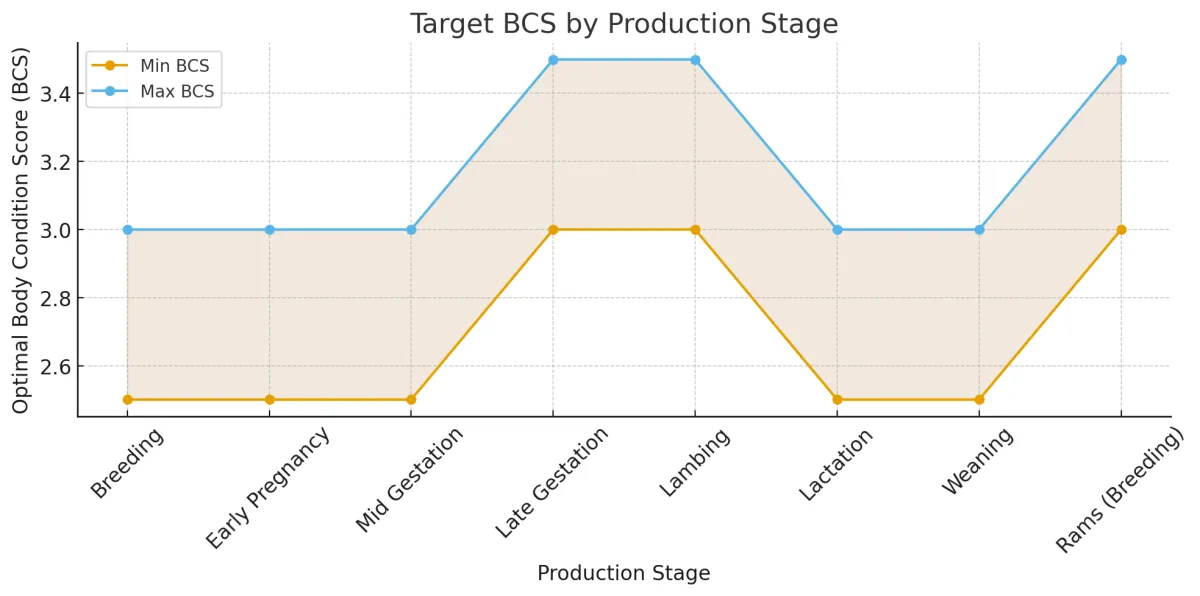
Optimal body condition varies throughout the production cycle:
Breeding (45-60 days before): 2.5-3.0
Early pregnancy: Maintain or slightly improve to 2.5-3.0
Mid-gestation: 2.5-3.0
Late gestation (last 6 weeks): 3.0-3.5
Lambing: 3.0-3.5
Lactation: 2.5-3.0 (some loss is normal)
Weaning: 2.5-3.0
Rams (breeding season): 3.0-3.5
The 90% Rule
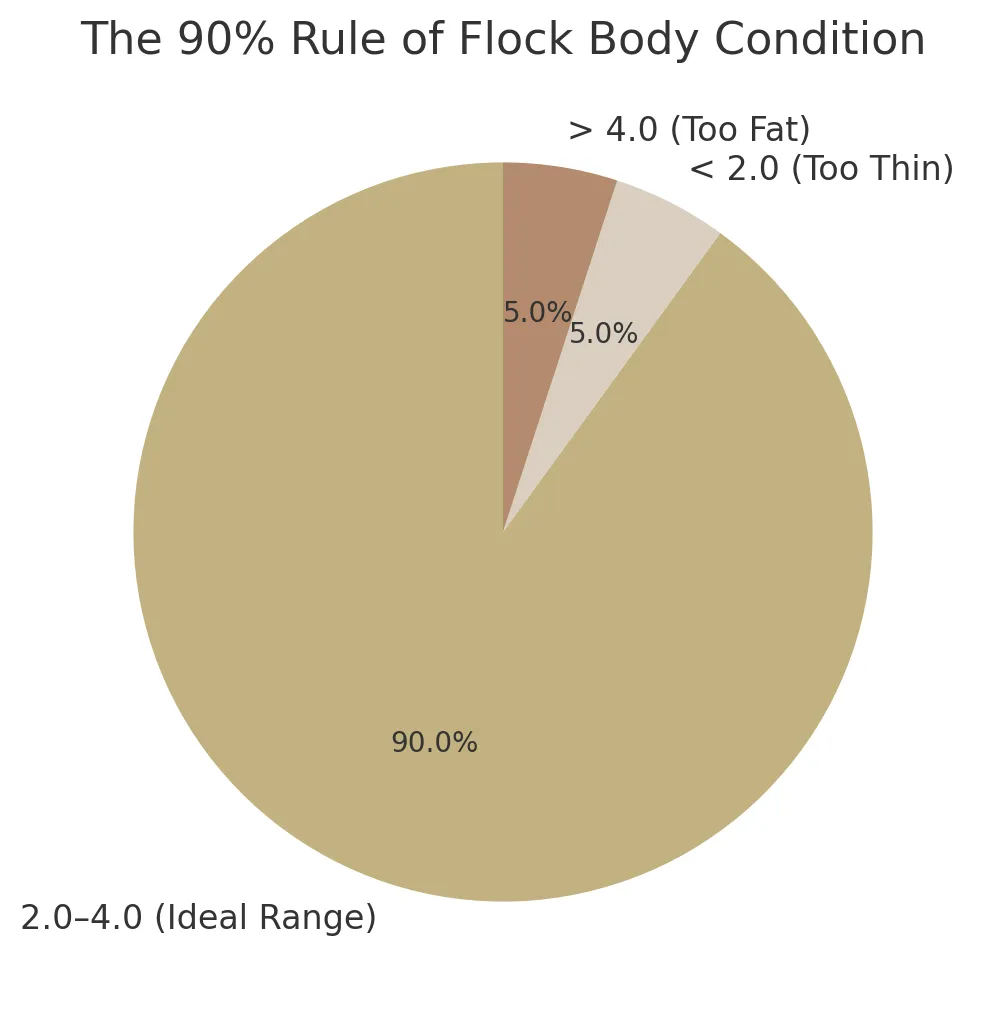
In a well-managed flock, approximately 90% of animals should score between 2.0 and 4.0. Animals scoring below 2.0 require immediate intervention, while those above 4.0 need reduced energy intake to prevent health complications.
Making Management Decisions: When to Be Concerned
BCS guides specific feeding interventions:
Under-conditioned sheep (BCS <2.5): Increase feed quality and quantity, add energy supplements, check for health issues
Over-conditioned sheep (BCS >3.5 outside lambing): Reduce concentrate feeds, increase fiber, prevent metabolic disorders
Proper condition maintained: Continue current nutrition program
Documentation and Record Keeping
Recording BCS data creates valuable management insights that transform individual assessments into actionable intelligence for your entire operation. Comprehensive documentation is essential for making informed decisions and tracking long-term flock performance. So. What is a record and what should it included:
Individual animal identification: Ear tag number or other unique identifier
Date of assessment: Critical for tracking changes over time
Body condition score: Use half-point increments (2.5, 3.0, 3.5) for precision
Production stage: Breeding, early pregnancy, late gestation, lactation, etc.
Weight (if available): Provides additional context alongside BCS
Notes on condition changes: Significant gains or losses since last assessment
Health observations: Any concerns noted during handling (lameness, coat quality, parasites)
Management actions taken: Feed adjustments, health interventions, group reassignments
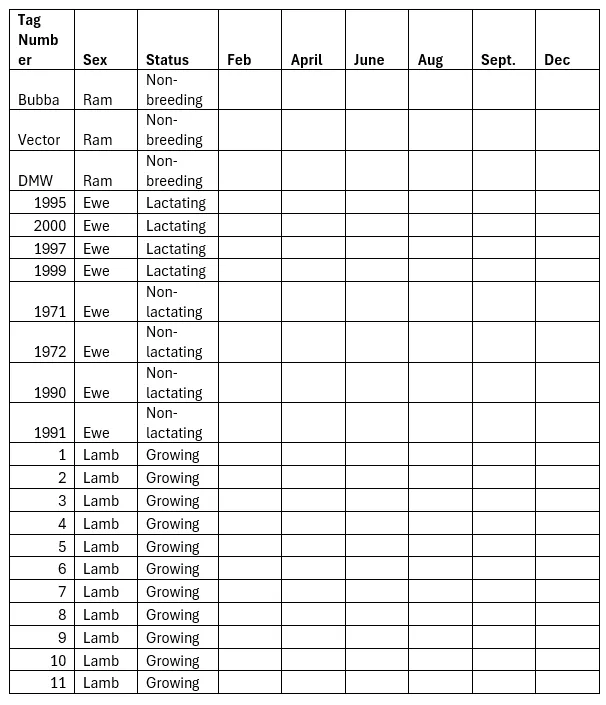
Using the Black Hammock Farm BCS Tracking Chart
This comprehensive tracking chart is the backbone of our body condition scoring program, designed to monitor every animal in our flock across critical assessment periods throughout the year. The chart organizes animals by tag number, sex, and current status (non-breeding, lactating, non-lactating, or growing), with dedicated columns for monthly BCS assessments in February, April, June, August, September, and December—strategically timed to align with key production stages.
Communication is the Key
Accurate BCS tracking is only valuable when information flows effectively between all team members. Every employee who handles sheep must understand that recording scores isn't just paperwork—it's how we collectively care for our flock. When you assess an animal and note a concerning score or change, that information must be immediately communicated to farm management and other staff members. A ewe losing condition in June needs intervention before August; a ram dropping below target BCS before breeding season requires immediate attention.
How to Use This Chart Effectively:
Record consistently: Enter BCS scores during scheduled assessment periods in the appropriate month column
Flag concerns immediately: Circle or highlight any score below 2.0 or above 4.0, and verbally notify management the same day
Track trends: Look horizontally across months to identify animals gaining or losing condition
Update status changes: When ewes transition from lactating to non-lactating or lambs are weaned, update the Status column
Communicate discoveries: If you notice patterns—like multiple animals in one group losing condition—bring it to the team's attention immediately
How to Use This Chart Effectively:
Before you start work, review the chart to see where animals currently stand. After assessments, don't just write scores and walk away—take a moment to discuss findings with whoever is working next. Ask questions: "Why is ewe 1971 holding condition better than 1972 when they're in the same group?" "Should we separate lamb #3 for additional feed?" These conversations, supported by documented data, are what transform numbers into actionable management decisions.
The Bottom Line:
The chart is a tool, but communication is the skill. Record accurately, share observations promptly, ask questions when scores don't make sense, and never assume someone else will notice a problem. Every conversation about body condition scores strengthens our ability to keep every animal thriving. When in doubt, speak up—your observations matter, and together we ensure no animal falls through the cracks.
1579 Walsh Street Oviedo,
Florida 32765
COMPANY
FARM SERVICES
LIVESTOCK PROGRAMS
FOLLOW US


POWERED BY:

© 2025 Black Hammock Family Farm. All rights reserved.
1579 Walsh Street Oviedo,
Florida 32765
COMPANY
FARM SERVICES
LIVESTOCK PROGRAMS
FOLLOW US
POWERED BY:
© 2025 Black Hammock Family Farm.
All rights reserved.